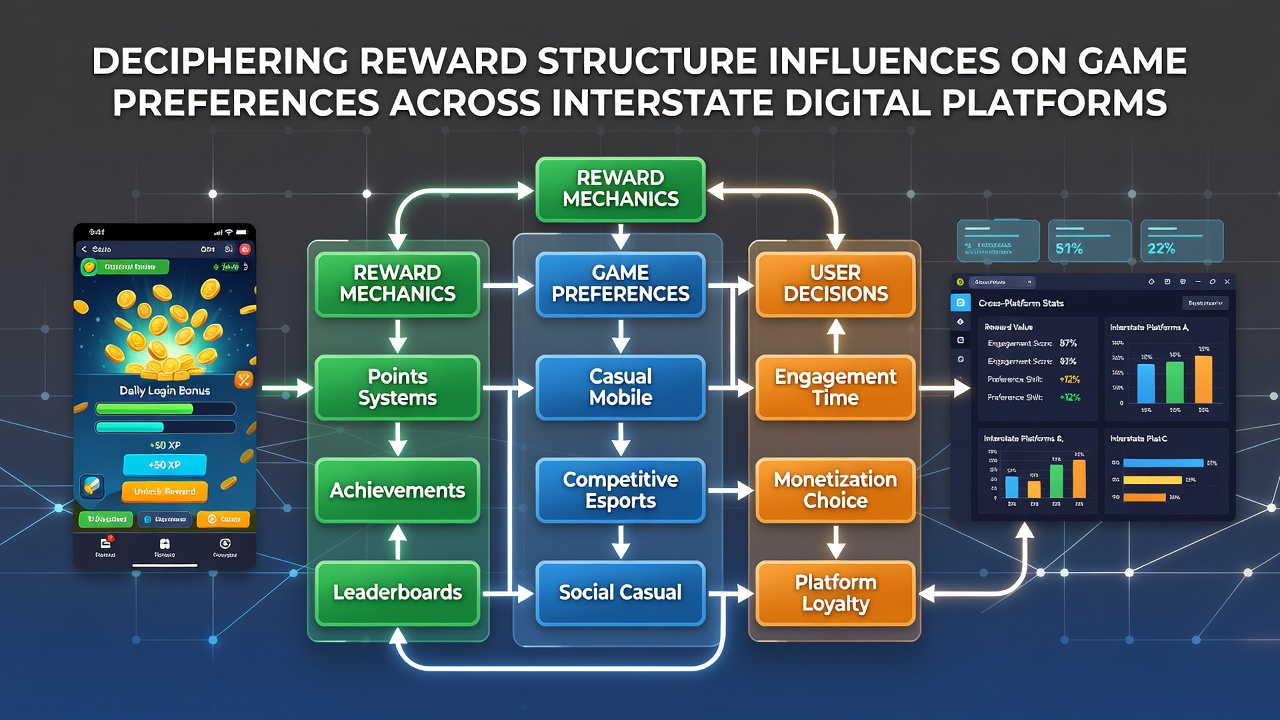
Deciphering Reward Structure Influences on Game Preferences Across Interstate Digital Platforms
Interstate digital platforms have expanded rapidly since the first multi-state compacts took effect, and reward structures now shape how players allocate their time across different game types. Data from regulatory filings show that loyalty points, tiered bonuses, and promotional credits appear more frequently in slot selections than in table game or poker sessions when operators run synchronized programs across borders. Researchers at several state universities have tracked these patterns through anonymized transaction logs, noting that players often migrate toward titles that accelerate point accumulation under unified reward formulas.
Core Elements of Reward Structures
Reward systems on these platforms typically combine base points per dollar wagered with multipliers tied to game category and session volume. Slots carry higher point rates in many jurisdictions because operators adjust the formulas to balance house edge with player retention goals, while table games receive lower rates due to slower pace and different risk profiles. According to figures released by the New Jersey Division of Gaming Enforcement, average point earnings per hour differ by as much as 40 percent between video slots and live dealer blackjack on multi-state networks. Those differences become visible when players compare their progress toward tier thresholds across state lines.
Operators also layer time-limited promotional credits that reset on a weekly or monthly cycle. Players who chase these credits frequently select games with shorter round times, allowing more attempts within the promotional window. Canadian regulatory summaries from the Alcohol and Gaming Commission of Ontario document similar shifts, where digital users increased slot play volume by double-digit percentages during active bonus periods while poker and roulette participation remained stable.
Game Preference Shifts Across Jurisdictions
Interstate platforms must reconcile differing state rules on game classification and payout reporting, which creates variation in how rewards translate into actual incentives. In states with stricter game categorization, certain table games earn fewer loyalty points than identical titles in neighboring jurisdictions. Players who maintain accounts across multiple states notice these discrepancies and adjust selections accordingly, often favoring slots when traveling between regulatory zones. Observers note that session data from July 2026 already reflects this adjustment, with slot activity rising on platforms that unified point systems earlier in the year.
Payment and Session Duration Correlations
Deposit method data further interacts with reward structures. Faster funding options paired with instant bonus activation tend to steer players toward games that support quick re-buys and repeated spins. Industry reports compiled by the American Gaming Association indicate that credit card and e-wallet users on interstate sites show higher average slot session counts per day compared with ACH or wire users, whose longer funding cycles align more often with table game or poker play. These patterns hold across platforms operating in at least three states simultaneously.

Data Patterns Emerging in Mid-2026
Analysis of July 2026 transaction records reveals that reward tier advancement correlates with increased play on progressive jackpot slots rather than fixed-payout table games. Players nearing the next loyalty level often switch to titles where a single large win can push them over the threshold, a behavior documented in aggregated logs from platforms licensed in Pennsylvania, Michigan, and West Virginia. Academic researchers examining these datasets emphasize that the effect strengthens when promotional credits carry expiration dates, prompting accelerated play in the final days of each cycle.
Cross-border play introduces additional variables. A user registered in one state may receive bonus offers calibrated to another state's regulatory framework, leading to temporary preference changes until the next reset. Those who monitor their accounts across state lines report spending more time on games that appear in both jurisdictions' approved catalogs, reducing the friction of switching between different reward calculations.
Regulatory and Platform Adaptations
State regulators continue to refine reporting requirements around loyalty mechanics, and several have begun requesting granular data on game-type distribution within reward programs. The Victorian Commission for Gambling and Liquor Regulation in Australia has published comparative studies showing that unified point systems across digital platforms produce measurable shifts in game mix, with slots gaining share whenever multiplier bonuses apply uniformly. Similar monitoring efforts in the United States focus on ensuring that reward structures do not inadvertently favor one game category over others in ways that conflict with responsible gaming guidelines.
Platform operators respond by adjusting point accrual rates seasonally, testing new formulas during slower months and locking in successful configurations for peak periods. These adjustments appear in public filings and help explain month-to-month changes in game preference data released by individual state gaming control boards.
Conclusion
Reward structures on interstate digital platforms continue to evolve alongside regulatory frameworks and player behavior data. Transaction records from 2026 demonstrate consistent links between point formulas, promotional timing, and the distribution of play across slots, table games, and poker. As more states finalize compacts and operators refine their systems, the relationship between reward design and game selection will likely remain a central focus for both regulators and platform developers seeking to balance engagement with compliance requirements.