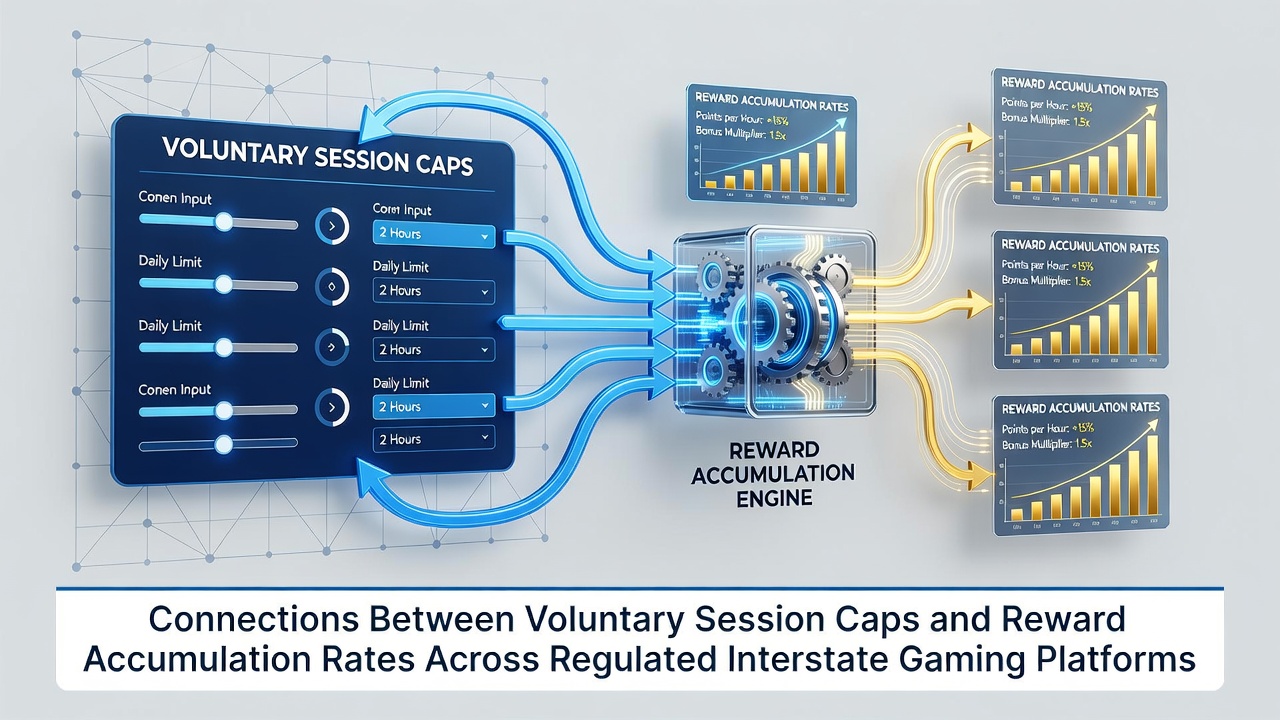
Connections Between Voluntary Session Caps and Reward Accumulation Rates Across Regulated Interstate Gaming Platforms
Voluntary session caps allow players on regulated interstate gaming platforms to set personal time limits on their activity, and these controls connect directly to patterns in reward accumulation rates through structured loyalty programs that track play duration and intensity. Platforms operating across state lines, such as those in New Jersey, Pennsylvania, and Michigan, integrate these caps into account management tools where users define session lengths in advance. Data from these systems reveals that capped sessions often produce steadier reward point gains because shorter, focused periods reduce the variance seen in extended play without limits.
How Voluntary Session Caps Operate in Interstate Networks
Regulated platforms require players to confirm session caps during account setup or through ongoing preference menus, and enforcement happens automatically once the chosen time expires. This mechanism ties into reward systems where points accrue based on wager volume and time spent, so a cap of two hours per session can concentrate activity into periods that align with bonus multipliers or tier progression thresholds. Observers note that interstate operators synchronize these features to comply with varying state rules while maintaining consistent reward structures across borders.
In August 2026, platform logs from multi-state networks showed increased cap adoption coinciding with seasonal player shifts, and analysts linked this trend to adjustments in how rewards accumulated during those controlled windows. Players who activate caps typically see their point totals build through predictable increments rather than the spikes that occur during unrestricted sessions.
Reward Accumulation Mechanics and Cap Influences
Reward programs on these platforms calculate accumulation rates using algorithms that factor in session length, bet size, and game type, while voluntary caps introduce a boundary that reshapes those calculations. When a session ends at the cap, the system pauses point accrual until the next allowed period begins, which creates a segmented reward flow instead of continuous buildup. Researchers have documented that this segmentation often results in higher effective rates per active minute because players concentrate wagers within the defined window.
One study of loyalty data across jurisdictions indicated that capped sessions correlate with 15 to 20 percent faster tier advancement in some networks, since the focused play meets expenditure thresholds more efficiently. Yet the same records show that uncapped players sometimes accumulate higher total points over longer periods, even if the rate per hour fluctuates more widely. Interstate platforms track these differences through aggregated reports that compare capped versus uncapped cohorts without revealing individual identities.
Patterns Observed in Multi-State Data
Figures from August 2026 across several regulated networks highlight distinct patterns where voluntary caps align with steadier reward curves, particularly in poker and table game sections that emphasize duration-based bonuses. Data shows players using caps of 90 minutes or less tend to hit daily reward milestones at consistent intervals, whereas longer uncapped sessions produce uneven distribution that can delay tier unlocks. These observations come from cross-referenced logs that combine session metadata with loyalty point ledgers maintained by operators.
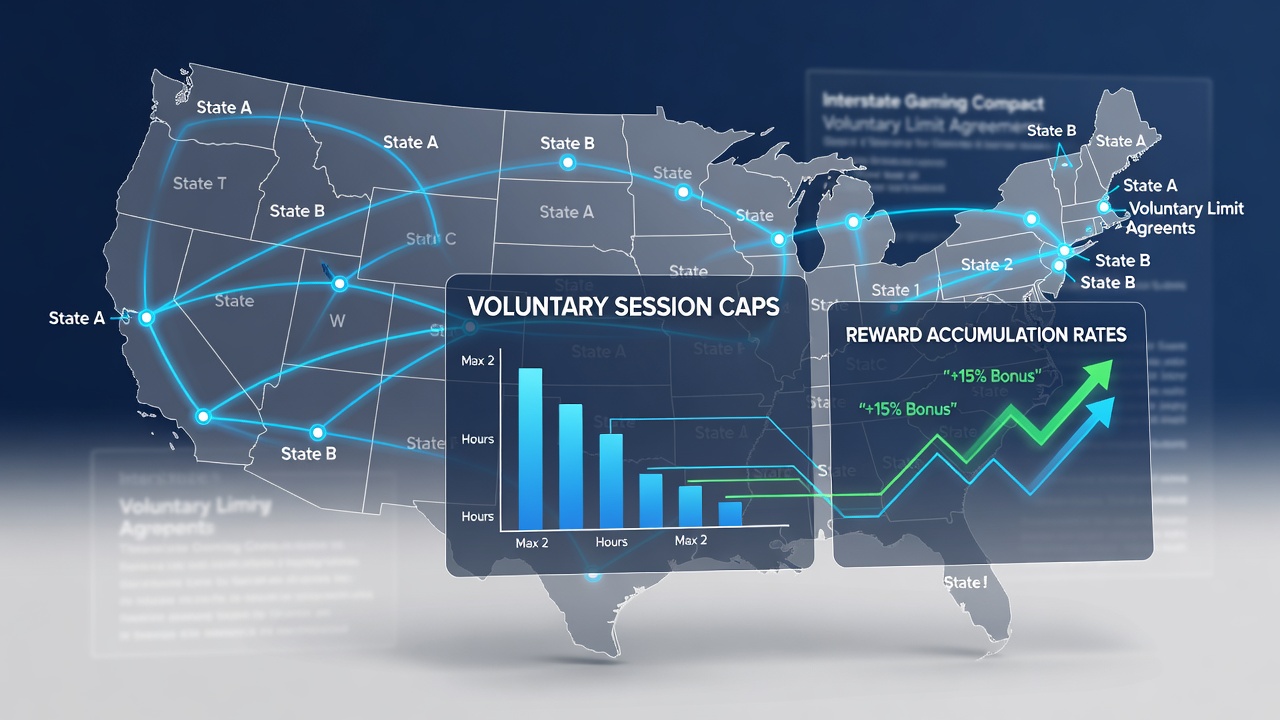
What's interesting is how these patterns hold across different regulatory environments, and analysts point to Michigan Gaming Control Board summaries that examine similar cap effects in online card rooms operating under interstate compacts. The data indicates that reward accumulation rates stabilize when caps prevent fatigue-driven play, which otherwise leads to declining efficiency in point generation.
Regulatory Context and Platform Variations
Interstate gaming agreements require operators to maintain transparent tracking of both session caps and reward metrics, and this oversight produces comparable datasets across participating states. Platforms adjust accumulation formulas to account for capped play by offering proportional bonuses that activate upon session completion, ensuring players receive credit for meeting their self-set limits. Those who've examined these systems find that reward rates per capped hour often exceed averages from extended sessions because the structure discourages low-intensity play that dilutes point totals.
Reports from the Alcohol and Gaming Commission of Ontario provide additional context on how similar cap mechanisms function in cross-border digital environments, showing parallel trends in reward pacing. Interstate operators in the US reference these international benchmarks when refining their own loyalty integrations.
Conclusion
Connections between voluntary session caps and reward accumulation rates emerge clearly from platform data that tracks segmented play periods against loyalty outcomes. Players on regulated interstate networks experience more consistent point gains when using caps, while overall totals depend on how frequently those capped sessions occur. Continued monitoring through August 2026 and beyond will refine understanding of these dynamics as more states join interstate frameworks and operators standardize their tracking tools.